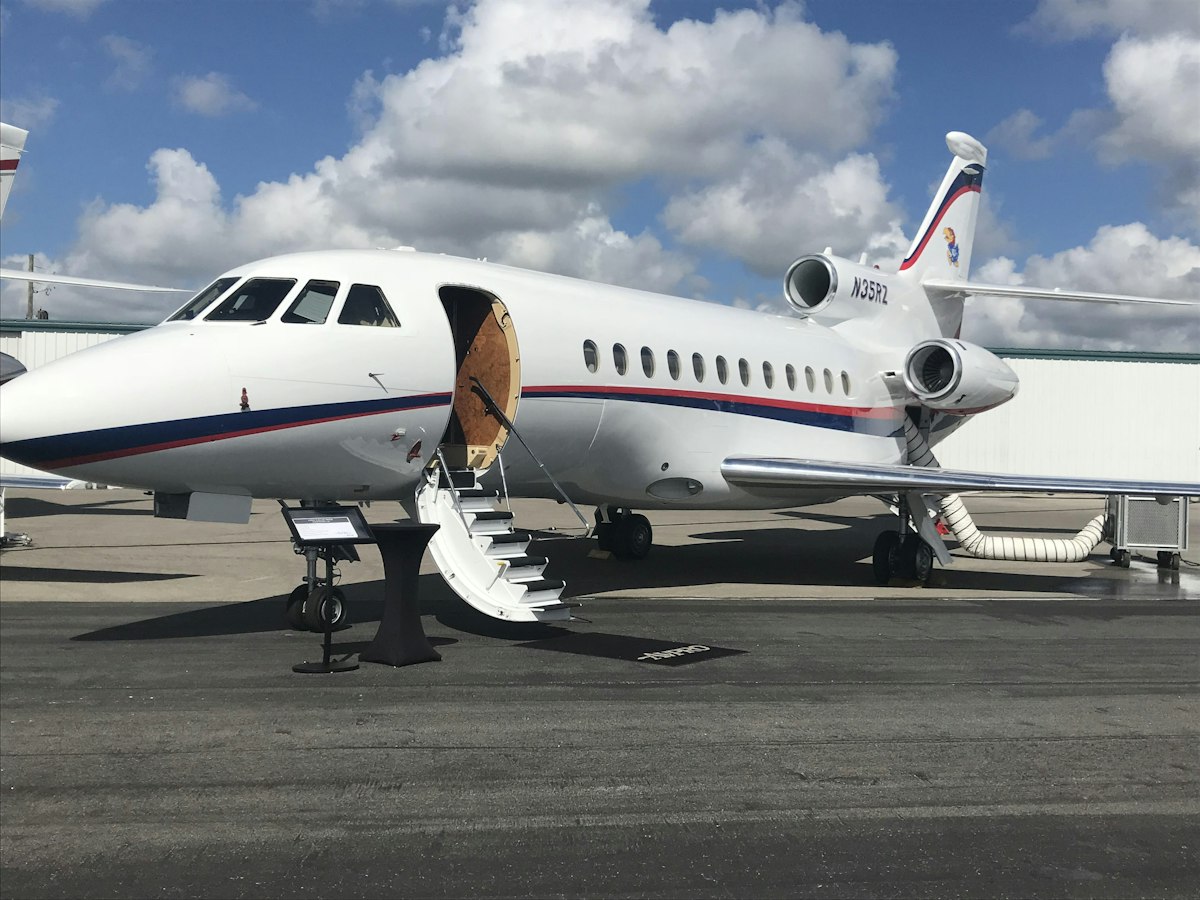

The private jet acquisition market has operated on the same commission-based model for decades. A buyer engages a broker, the broker finds an aircraft, and the broker takes a percentage of the sale price — typically between 1% and 3%. On a $25 million Gulfstream G650, that's $250,000 to $750,000. And here's the uncomfortable truth: the higher the price, the more the broker earns.
The Conflict Nobody Talks About
When a broker's income is directly tied to the purchase price, where does their incentive really lie? If they negotiate the price down by $2 million, they just reduced their own commission by $20,000 to $60,000. This structural misalignment has persisted in aviation for decades, and it costs buyers dearly.
At MDG Aviation Limited, we recognized this problem early. That is precisely why we operate exclusively on a transparent flat-fee model — a fee agreed upon before the engagement begins, regardless of the final acquisition price. Our incentive is singular: secure the best aircraft at the lowest possible price.
How the Flat-Fee Model Works
The process is straightforward. During initial consultation, we agree on a flat fee based on the complexity and scope of the acquisition — not on the aircraft's market value. Whether we find you the perfect jet for $8 million or $80 million, our fee remains the same.
This means every dollar we negotiate off the purchase price is a dollar saved in your pocket — not taken from our compensation. It fundamentally changes the dynamic from adversarial to collaborative.
Real-World Impact
Consider a recent engagement where we sourced a super-midsize jet for a client in the Middle East. The initial asking price was $18.5 million. Through rigorous market analysis, maintenance reserve calculations, and strategic negotiation, we secured the aircraft for $15.2 million — a savings of $3.3 million.
Under a traditional 2% brokerage model, the broker would have earned $370,000 at the original price versus $304,000 at the negotiated price. That $66,000 reduction in commission creates a tangible disincentive to negotiate aggressively. Under our flat-fee model, we had every reason to push for the lowest possible price.
What to Look for in an Acquisition Partner
When evaluating potential acquisition advisors, ask these critical questions:
Fee Structure — Is the fee a percentage of the purchase price? If so, recognize the inherent conflict.
Seller Relationships — Does the advisor receive any compensation from sellers, OEMs, or maintenance facilities? Dual-agency relationships compromise your interests.
Transparency — Will the advisor provide complete visibility into their fee structure, negotiation strategy, and all communications with sellers?
Track Record — How many acquisitions have they completed? What is their average negotiated savings versus asking price?
The Bottom Line
Aircraft acquisition is one of the largest purchases most individuals and corporations will ever make. The advisor you choose should be structurally incentivized to protect your capital. A flat-fee model ensures exactly that — no hidden agendas, no misaligned incentives, just relentless advocacy for the buyer.
At MDG Aviation Limited, we've built our reputation on this principle. With 40+ successful acquisitions across six continents, we've proven that transparency isn't just ethical — it delivers superior financial outcomes for our clients.